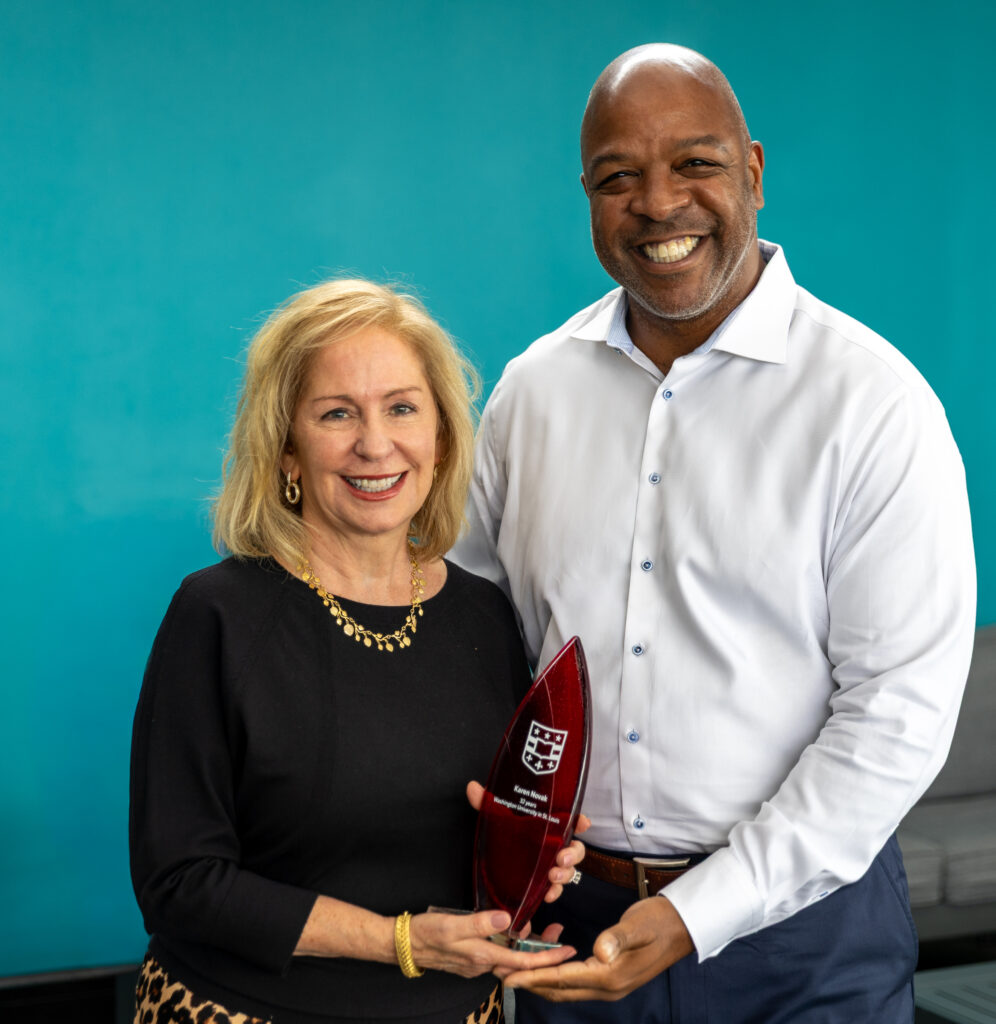
When Karen Novak began taking classes through University College, she could not have known that years later she would help lead the very school where she had once been a student.
Novak, associate dean and chief of staff for WashU Continuing & Professional Studies (CAPS), retired Oct. 2 after 32 years of service to Washington University. Her career spanned the School of Medicine, University College and CAPS and included some of the most consequential periods of change in the school’s history.
Before she became one of its leaders, however, Novak experienced the school much like many CAPS students do today: as a working adult returning to the classroom while simultaneously balancing education and family.
While working at the School of Medicine, Novak pursued her master’s degree through University College, completing it in 2011. The experience introduced her firsthand to a school and mission that would soon become the next chapter of her career.
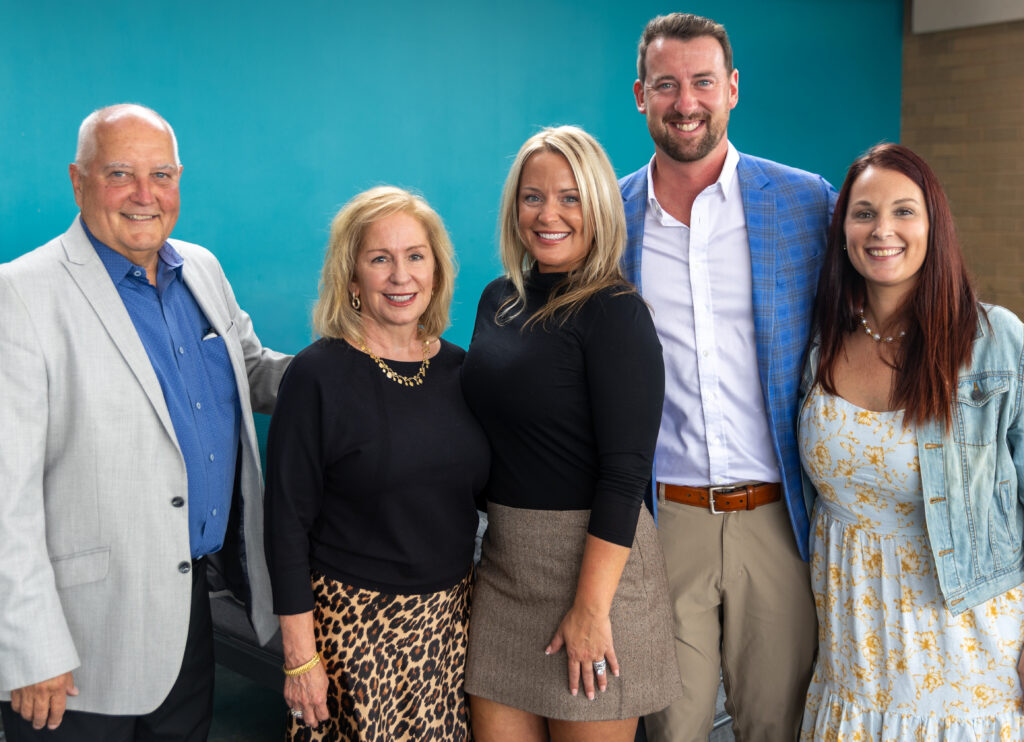
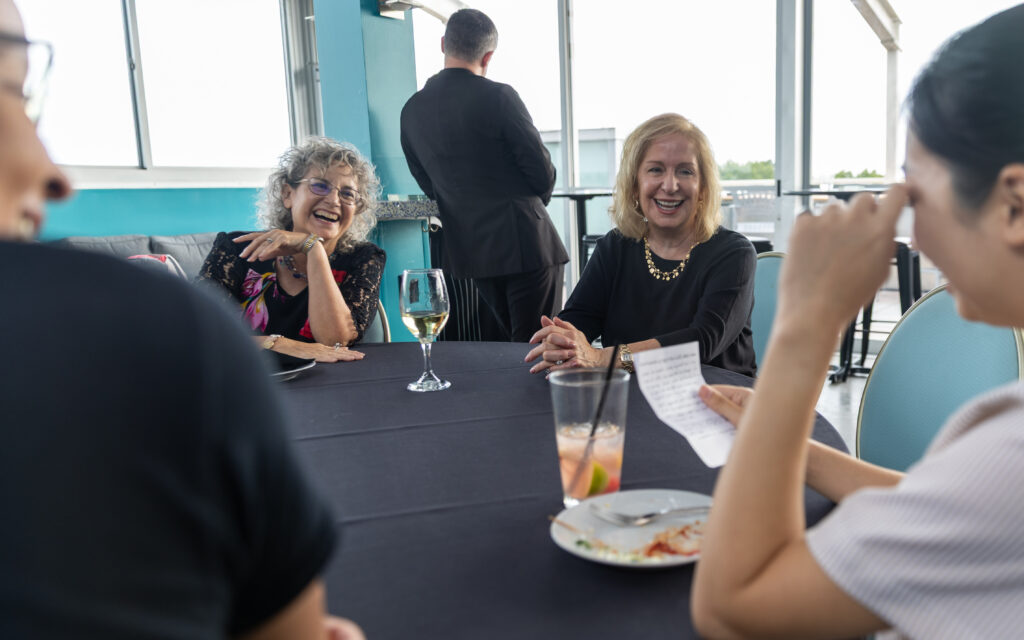
“I was familiar with University College. I liked the mission. I respected that,” Novak said. “I thought it would be a new opportunity for me to have a new experience with WashU outside of the medical school on the Danforth Campus.”
In June 2012, less than a year after earning her degree, Novak joined University College as a director overseeing administration, finance and operations.
“Karen was, from the beginning, an essential person in University College, “said former University College Dean Bob Wiltenburg. “When she arrived she immediately and wholeheartedly embraced the mission to the community and to adult students.”
A career built around learning and change
Novak’s relationship with WashU began decades earlier. She first joined the School of Medicine in 1981, working in management and special projects across several departments and spending much of her time in the Department of Surgery.
After stepping away from the university to focus on her family and work in a small business, Novak was brought back to WashU by Bob Feltman, who had worked with her earlier in her career and was working in Pathology and Immunology at the time.
Feltman remembered Novak as someone he could give an idea or problem to and trust her to figure out what needed to happen next.
“She was the type of person that wanted to get a feel for what your idea was, get a sense of it and then, boom, let her loose,” Feltman said.
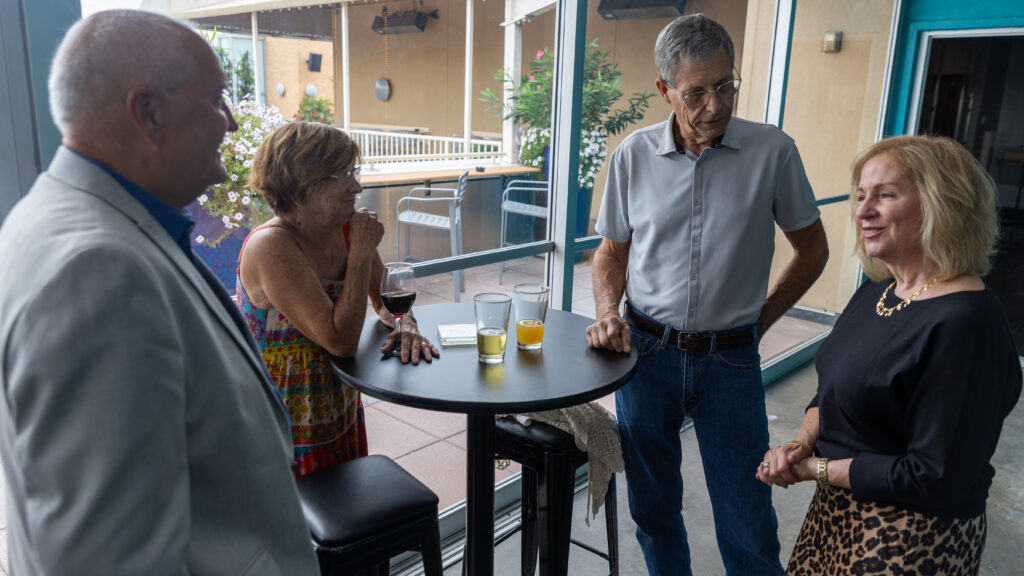
That ability was paired with an approach that focused as much on the people involved as the task itself.
“She cared about the people doing the job,” Feltman said. “All of a sudden, everybody’s working together. That’s what it takes.”
Feltman said that combination made Novak particularly effective when navigating unfamiliar or complicated situations.
“You can take a great plan with bad people and it’ll fail,” he said. “You can take a bad plan — which I have done a few times — give it to Karen or good people and they’ll make it work and then improve it.”
Feltman described Novak’s approach as diplomatic but effective, someone who could work through complicated situations and get things done.
Back at the School of Medicine, Novak took on responsibilities spanning technology, personnel, clinic administration, business proposals, finance and budgeting. It was during this period that she also returned to the classroom, earning her master’s degree through University College while continuing to work.
That experience — balancing work, family and education while preparing for what came next — gave Novak a personal connection to the modern learners University College served then and CAPS continues to serve today.
After joining University College in 2012, Novak brought the same willingness to learn and adapt to her new role.
“I would learn whether I knew everything about that responsibility or not,” Novak said. “I would just jump in and learn it.”
Over time, her responsibilities grew to encompass nearly every aspect of the school’s operations and administration.
“I soon found myself relying on her sound judgment in matters large and small, including, of course, her mastery of all aspects of finance and budget, but also in the subtler matters of personnel and team and group dynamics,” said Wiltenburg.
She led work in financial planning and budgeting, human resources, technology, organizational planning, facilities, compliance and school-wide initiatives. When needs arose outside her immediate responsibilities, she stepped in, including taking on oversight of marketing during a leadership vacancy.
With each new challenge, Novak’s role continued to expand. She worked with multiple deans and colleagues across WashU, developing an institutional knowledge that became increasingly important as University College itself changed.
“It is challenging to anticipate the needs of the Dean’s office and engage with so many stakeholders, both internal and external, and Karen did with skill and grace,” said CAPS Dean Sean Armstrong. “I am still waiting to hear her complain!”
Eventually, that growth led to her promotion into school leadership and ultimately to chief of staff.
Helping guide a school through change
Change became one of the constants of Novak’s career. She helped University College navigate the disruption of the COVID-19 pandemic and played an important role as the school transitioned from Arts & Sciences and became Washington University’s eighth school.
“Karen led with class and competence,” said Armstrong. “Cleary understood that change meant leading implementation enthusiastically.”
The transition brought new responsibilities as functions previously supported by Arts & Sciences had to be developed and managed within the new school.
For Novak, those moments were less about any single project than understanding what needed to happen and bringing the right people together to make it possible.
“Things had to change and things had to happen and you just do it,” Novak said. “And you don’t do it without other people, obviously. It’s working together. It’s in collaboration. It’s working across campus.”
For several years, her responsibilities also included leadership oversight of the Osher Lifelong Learning Institute (OLLI). Novak helped shepherd the program through its transition from CAPS to the Brown School’s Harvey A. Friedman Center for Aging, a move she believes positioned OLLI well for its future.
“The mission of OLLI and the impact OLLI has on seniors is unmistakable,” Novak said, pointing particularly to the relationships formed through its programming. Of the transition, she added, “It was difficult, but yes, I’m glad I was able to help.”
Looking back, however, Novak did not identify a particular program, transition or administrative accomplishment as the defining achievement of her career. Instead, she pointed to the trust others placed in her and the opportunity to help people through periods of change.
“I guess I would be very proud to say that I’ve had people in leadership who have trusted me to be able to accomplish things that need to get done,” Novak said.
She also credited the deans and other leaders she worked with throughout her career for giving her opportunities to take on new responsibilities.
“I am so grateful for the opportunities that they’ve given me and the confidence that they’ve had in me,” Novak said. “I don’t know that I would have done things on my own had they not had that confidence.”
Looking toward what comes next
As Novak leaves CAPS, she sees a school that is still evolving. She is particularly optimistic about CAPS’ growing emphasis on workforce development and its opportunities to work with employers and other schools across WashU.
“I think CAPS is just going to continue to grow,” Novak said. “I think that we’re just beginning that. I think that as years go by … it’s just going to get better and it’s going to help with the St. Louis economy.”
Her advice to the colleagues continuing that work reflects the approach she followed throughout her own career: keep learning, understand the work happening around you and collaborate.
“Just keep learning, continual learning, collaboration,” Novak said. “You can’t just limit yourself to one kind of cog. You have to be exposed to everything. And you have to be willing to be part of the whole.”
It is an approach that also brings Novak’s time at CAPS full circle. She came to University College as a working adult continuing her education, returned as an administrator and eventually became a leader of the school it would become.
“Altogether, I think she has been an extraordinary employee (and person!) and I wish for her all good things in retirement,” reflected Wiltenburg.
Retirement will bring more time for travel and for Novak and her husband, Greg, to spend with their grandchildren. But leaving WashU does not mean leaving behind the curiosity that helped shape her career.
“I’ll continue to learn in different ways,” Novak said. “That’s a lifelong thing that will never change. It will just be different, but it will never change.”