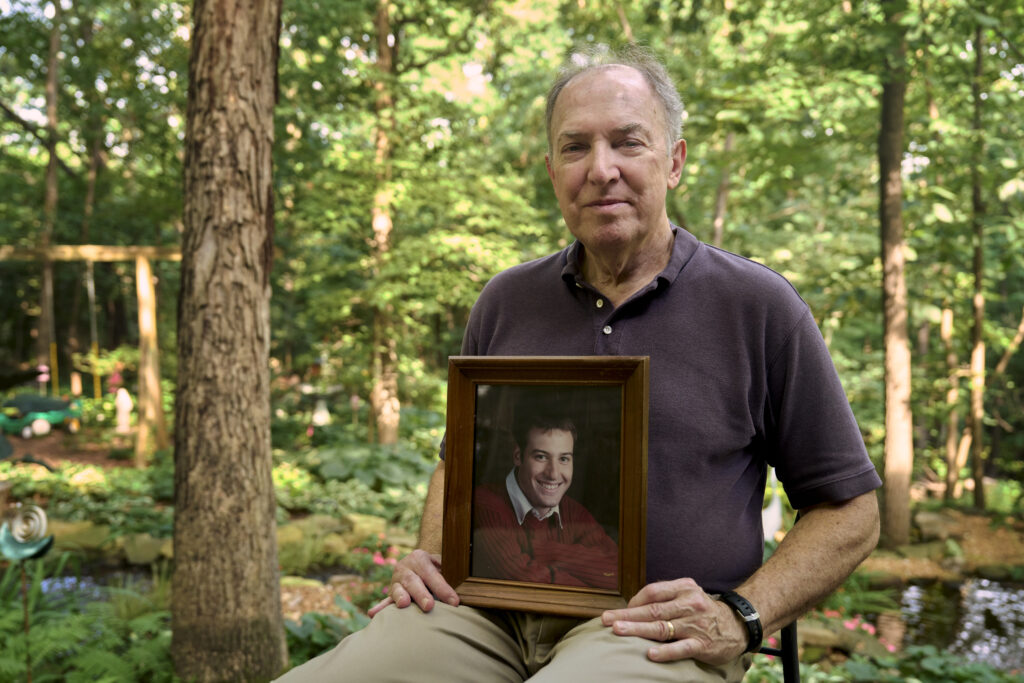
When Larry McCord enrolled in his first evening class at WashU’s Continuing & Professional Studies (CAPS)—then called University College—in the early 1970s, he wasn’t imagining national recognition or regional impact. He was a young engineering student trying to keep up with a rapidly evolving computing field and looking for practical skills he couldn’t find in his daytime coursework.
McCord would later build a long career in information technology and even teach at WashU CAPS, but the most consequential part of his life—his purpose—would emerge decades later from profound grief.
In 2025, McCord was named a national AARP Purpose Prize honoree, recognized as one of five leaders over the age of 50 who have transformed the lives of others through service.
The award includes $75,000 to strengthen McCord’s nonprofit, CHADS Coalition for Mental Health (CHADS is an acronym for Communities Healing Adolescent Depression and Suicide), and honors two decades of work shaped by the loss of his son.
It also highlights something else: the journey of a CAPS alumnus who used education, experience and heartbreak to build an organization now reaching more than 60,000 students each year across Missouri and Illinois, part of the more than 700,000 young people CHADS has served since its founding.
A Student Looking for Relevance
McCord’s connection to CAPS began with necessity.
As an applied math and computer science major in the WashU School of Engineering, he realized the job market was using a vocabulary he didn’t speak.
“I started looking at the ads for jobs,” he recalls. “They were mentioning things like COBOL and CICS and TSO… and I had no idea what they were talking about. And I was going to school for that.”
It was CAPS that offered a solution for McCord through courses tailored to the current industry needs.
“I ended up being a part-time day student in the engineering school and nearly a full-time student at night in CAPS—taking classes three or four nights a week.”
Those evening courses gave him the technical language of his field, helped shape a successful IT career, and grounded him in the ethos that defines CAPS today: education tailored to workforce needs, delivered with flexibility and purpose.
A Loss That Changed Everything
In 2004, McCord’s life shifted irreversibly.
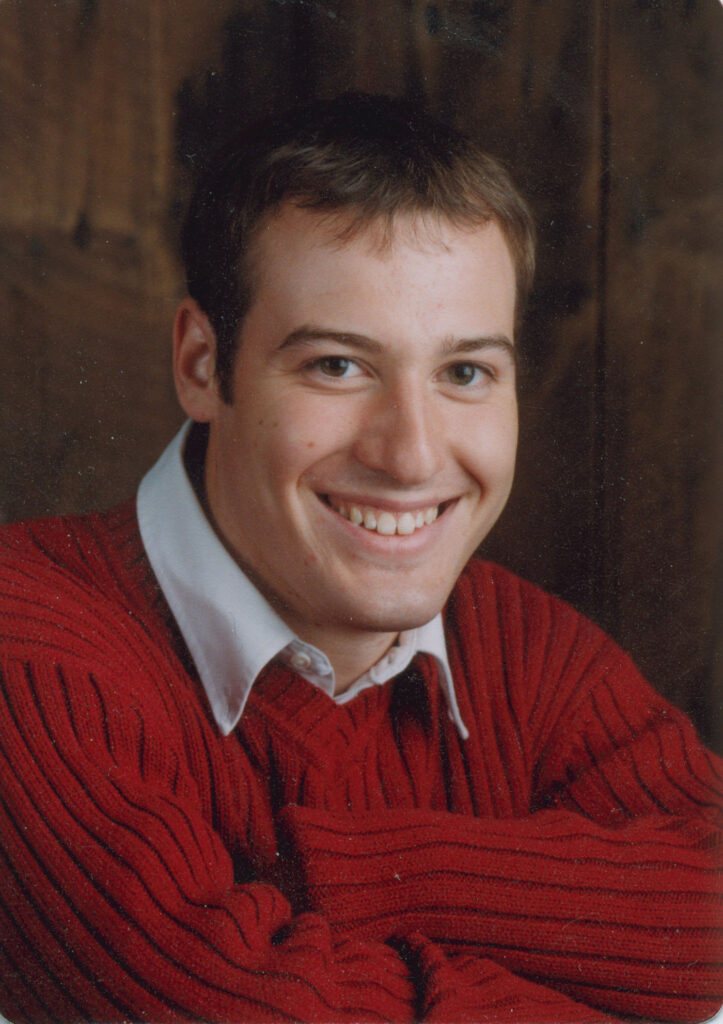
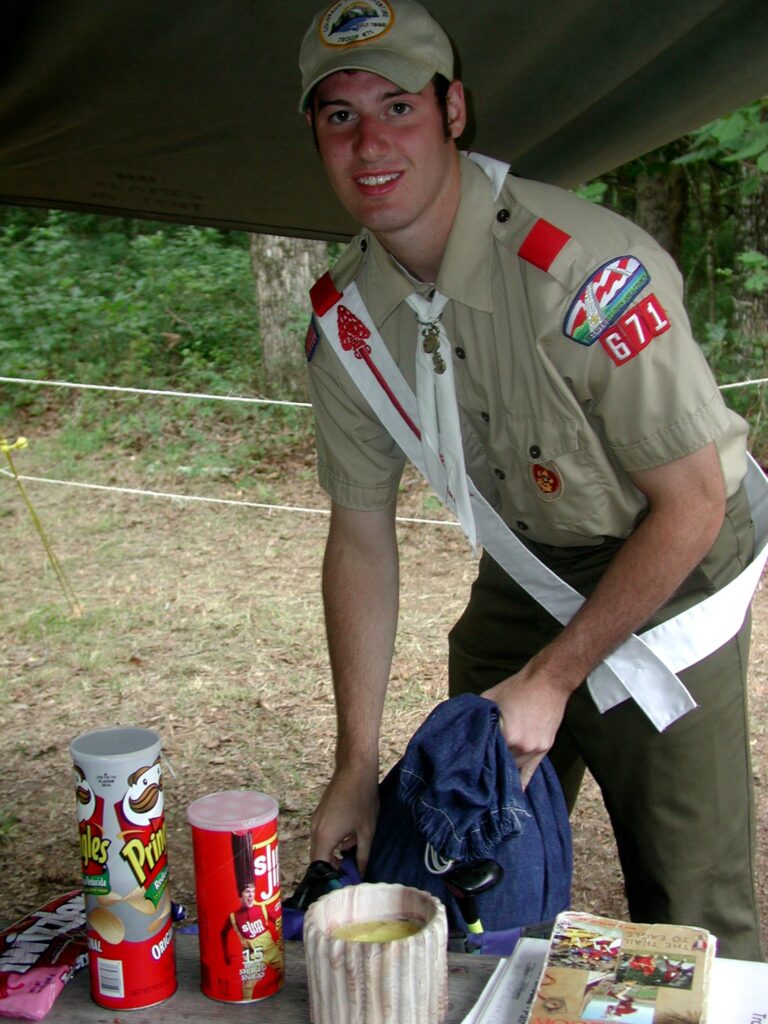
His son, Chad, a bright, accomplished student, athlete and Eagle Scout, died by suicide after months of escalating crisis. He had struggled with depression and had been hospitalized multiple times. His insights during those months revealed the startling truth that youth struggling with mental health are also stigmatized.
“If he came back to school from being out because of cancer, they would have rallied around him,” McCord recalls his son saying. “But since he was out of school with a suicide attempt… they would shy away and think that he was kind of weird.”
He also saw the absence of language about mental illness in schools.
“They’d talked about drinking, driving, drugs and sex… and never about depression, never about suicide.”
Shortly before he died, Chad shared a hope:
“When I get better… I want to stand up in front of my class and say, ‘I’m Chad, and I have depression.’”
He never got to speak those words.
After Chad’s death, Larry and his wife Marian decided they would speak those words for him, funneling their grief into a passion to help make sure other teenagers did not suffer the same fate.
They founded CHADS with an initial goal of funding research at WashU that could accelerate understanding of adolescent mental health.
But the McCords soon faced the reality of the field: meaningful scientific breakthroughs required millions—far beyond the reach of a small, grieving family raising funds through trivia nights and track events.
So they changed course, shifting to providing direct services—the conversations, education, counseling and support networks Chad had needed.
“We started around our kitchen table,” McCord says. “We chose friends that spread out the expertise we did not have—a lawyer, an accountant, someone in hospital management, a business person.”
For years, CHADS had no paid staff.

“I wasn’t paid until 2013,” he notes. “Marian didn’t want to make any money off of this… so we donated her salary back to CHADS.”
As the nonprofit grew, WashU appeared at pivotal moments. CHADS entered the Skandalaris entrepreneurship competition, where judges urged the organization to formalize and professionalize:
“You’ll never be considered sustainable if you do not have paid staff.”
It was the push they needed to evolve from a volunteer effort into a fully structured regional service organization.
Programs That Reach Students Where They Are
As CHADS moved from a grief-born idea into a fully realized organization, its impact grew in ways the McCords could never have predicted. Today CHADS serves students across the St. Louis region in hallways and classrooms, in moments when a student hesitates before raising a hand and in conversations that can—and often do—save a life.
One of CHADS’s earliest and most enduring commitments is teaching students what Chad never heard in school: how to talk about mental health.
Using an evidence-based curriculum (SOS Signs of Suicide), CHADS educators visit classrooms to teach the ACT model—Acknowledge, Care, Tell a trusted adult. It’s a simple framework, but for many students, it opens the first real language they’ve ever been offered.
“They aren’t equipped to solve depression or suicide risk on their own,” McCord explains. “What we offer is a practical step they can take—bringing themselves or a friend to a trusted adult who can initiate counseling.”
What happens next is where CHADS’ presence becomes life-altering.
Counselors, embedded in schools across the region, meet students where they already are—no transportation barriers, no insurance complications, no waiting lists. The volume of need is staggering.
“We see at least one suicidal kid every day we’re in a school,” McCord says. “We routinely have 11 or 12 percent of kids ask for help… that’s 7,000 students a year.”
Beyond counseling, CHADS’ mentoring program provides weekly, long-term support rooted in CASEL social-emotional competencies. Mentors work with students from early elementary school through high school, guiding them through goal setting, self-management, communication and resilience. The aim is prevention—not only crisis intervention, but the cultivation of skills that allow students to navigate life long before they hit a breaking point.
“The farther upstream you go, the better it is for the kids,” McCord reflects.
That upstream work has carried CHADS far beyond St. Louis County. School districts and community leaders from Hannibal, Jefferson City, Columbia and southern Illinois have reached out, asking for help.
Today CHADS operates in 26 Missouri counties—reaching 44% of the state’s population—and projects that by expanding in the Kansas City and Springfield/Joplin regions the organization will help achieve a 50% reduction in youth suicide attempts statewide by 2032.
CHADS has grown between 15% and 20% every year and now works in 344 schools across 69 districts, serving more than 62,000 students annually.
Since its founding, the organization has delivered 22,679 SOS presentations, provided 45,097 counseling sessions and led 64,904 mentoring sessions.
CHADS is also CARF accredited, meeting more than 2,500 quality standards in its most recent audit—achieving the highest level of performance.
Honoring a Mission—and the Son Who Inspired It
The AARP Purpose Prize recognizes leaders who turn the later chapters of life into their most impactful. For McCord, the award is both a validation and an amplification. It allows CHADS to deepen its capacity, extend counseling services and meet growing rural demand. But more than anything, it affirms that Chad’s words—the ones he wished he could speak to his classmates—are now reaching students across an entire region.
Every presentation CHADS holds, every student who signals for help, every parent who learns what to watch for—all of it traces back to the grief of two parents who refused to let silence win.
“I think Chad would be extremely proud,” McCord said. “I think he’d be absolutely amazed at how much we have carried on his voice, what he wanted to do.”